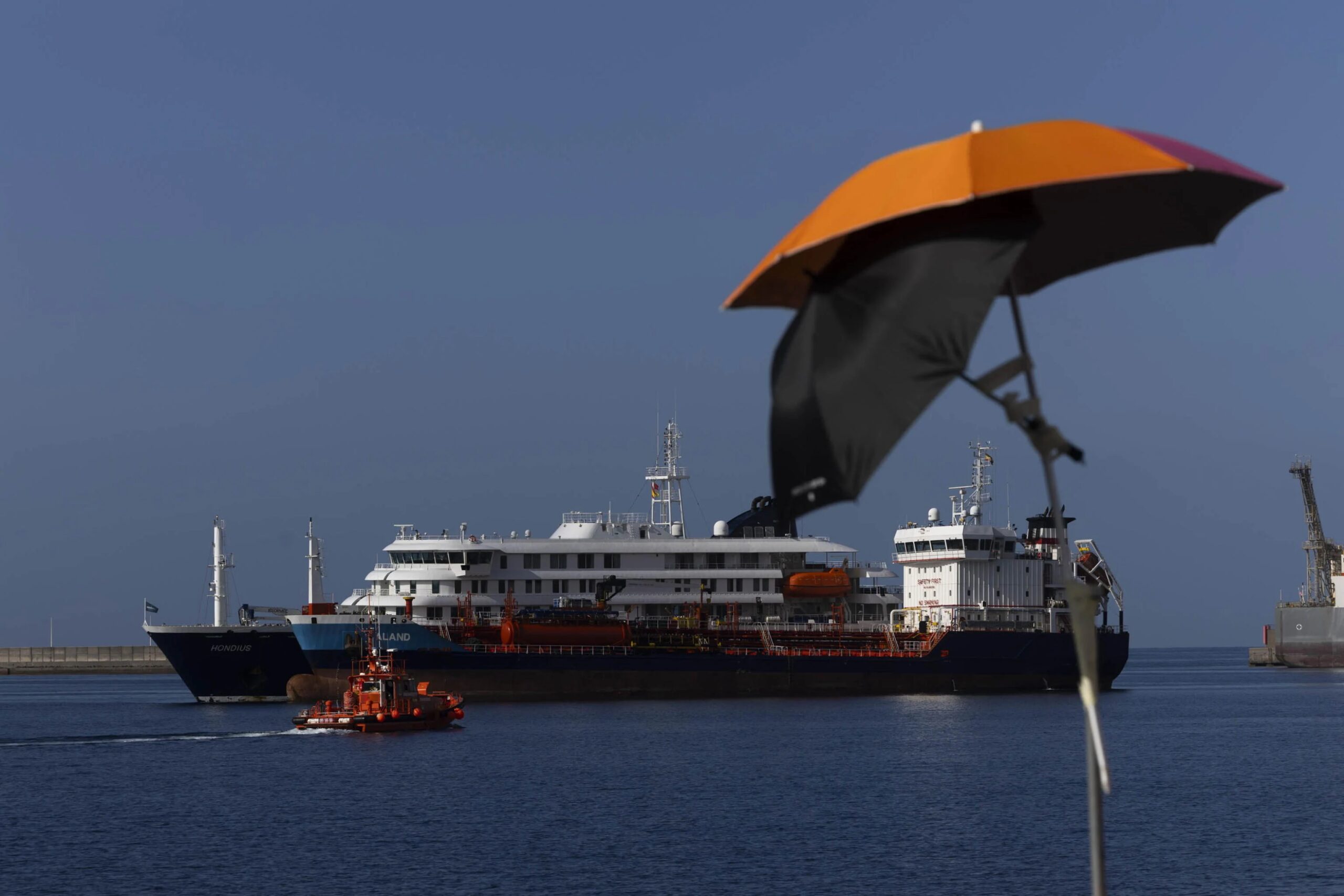
As the evacuation of the Hondius ship concludes, the first hantavirus infections of some passengers (all in isolation) are recorded in France and the United States. The risk of contagion remains low.
With the ship docking MV Hondiuson board which the infamous outbreak broke out Hantavirusthe delicate period has begun for many countries repatriation and isolation procedure for exposed passengers to the virus.
In fact today they are at least two new cases of contagionboth involving two unfortunate cruise ship passengers.
First cases in the United States and France
The US Department of Health announced today that one of the 17 American citizens repatriated from the ship has tested positive slightly positivewhile another presents mild symptoms.
The overseas passengers had been transferred to Eppley Airport in Omaha, Nebraska, met by ambulances and medical vehicles directly on the tarmac.
The two who tested positive they traveled in biocontainment units on the plane, separated from other passengersand were referred to the Nebraska Biocontainment Unit and the National Quarantine Unit of the University of Nebraska Medical Center, a facility specialized in the management of high-risk communicable diseases.
In Europe, however, the first case of Hantavirus was reported after the false alarm of the Dutch flight hostess.
Also in this case he is a cruise ship passenger who returned (in isolation) to France. This was confirmed live on France Inter radio by the French Minister of Health, Stéphanie Ristwhich in the morning communicated the positivity of a woman who had developed symptoms during the return flight after evacuation from the MV Hondius.
His condition worsened overnight and hantavirus tests came back positive. The woman is hospitalized in a hospital specializing in infectious diseases, in isolation.
The French government adopted during the night a decree that allows potentially contaminated people to be quarantinedcurrently 22 registered in France.
Low risk
Although the spread of the virus in multiple countries is fueling public concern, international health authorities are calling for calm.
The World Health Organization places a low risk and the ECDC, the European Center for the Prevention and Control of Infectious Diseases, attributes a very low risk to the general population in Europe.
In this context, the Italian Ministry of Health is also preparing a circular intended for Regions and border offices to do an overview of the situation and indicate what to dobased on ECDC indications, in the event of people showing symptoms attributable to the infection.
The four Italians in quarantine, all on board the KLM flight bound for Rome on which an infected woman on the ship who later died in South Africa had boarded for a few minutes, They are in good health and in isolation at their homes.
Parachute over the Atlantic: the Tristan da Cunha operation
While the world follows the Hondius passenger repatriation operations in Tenerife, the United Kingdom has parachuted into the South Atlantic help and specialists to an overseas territory among the most isolated in the world.
Six paratroopers and two military doctors were dropped from the sky for bring emergency help to a suspected infected patient and to the micro-population of Tristan da Cunhaone of the most remote human settlements on the planet, without an airstrip.
The emergency intervention was triggered by the critical situation of the patient: the man, a British citizen who was a former passenger of the Hondius who landed on the island in mid-April, had had the first symptoms of Hantavirus on 28 April and had gone into isolation.
Treated by only two doctors on the island, his respiratory conditions did not improve and the oxygen supplies of the small local health facility were almost exhausted.
Paratroopers from the 16th Air Assault Brigade simultaneously scrambled vital supplies of oxygen and other medical supplies, taking off aboard a Royal Air Force A400M Atlas. An operation with high material and symbolic value.