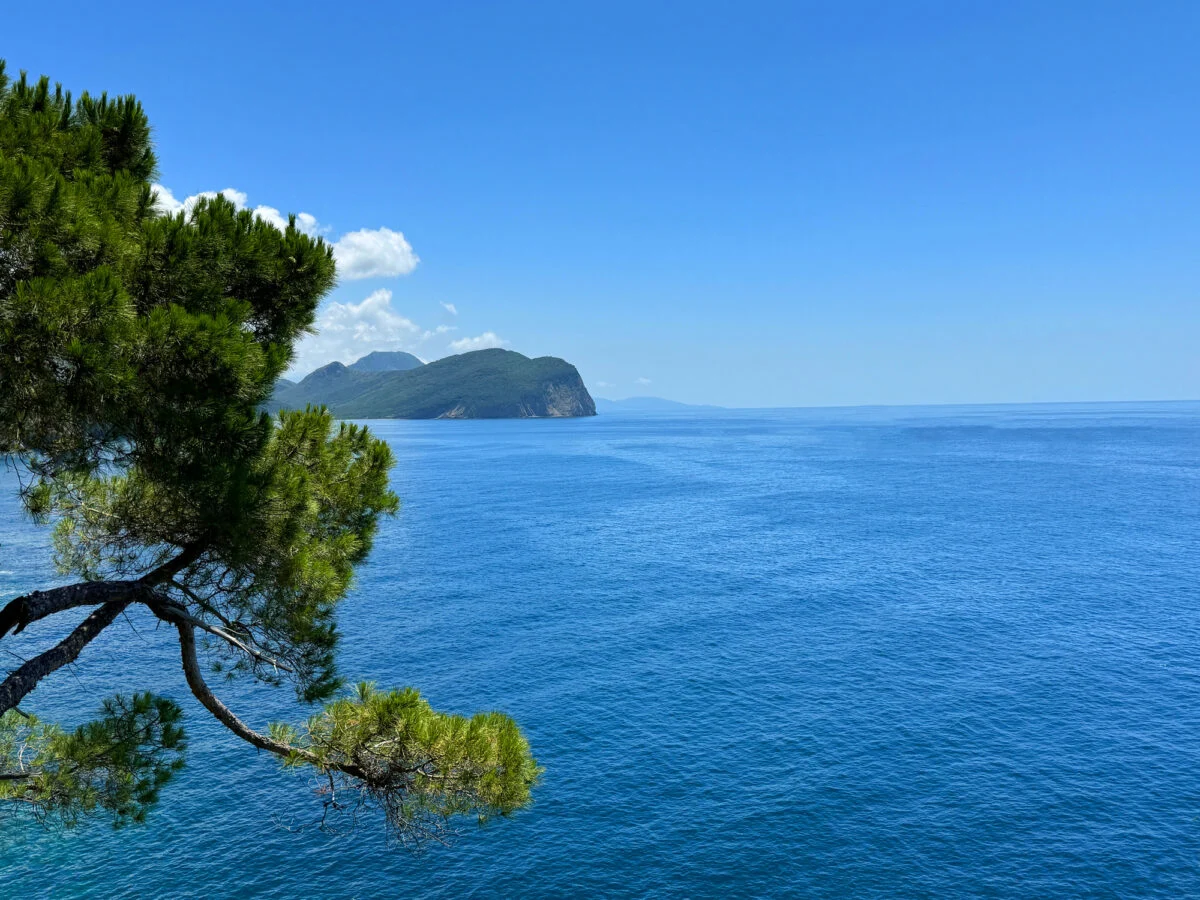
With summer now upon us, one of the most observed rankings by Italians and foreign tourists when it comes to holidays, sea quality and environmental sustainability is back. The 2026 Blue Flags awarded by the FEE – Foundation for Environmental Education – in fact photograph an Italy that continues to invest in the quality of its coasts, but also in land management, sustainable mobility and the transformation of tourism in an increasingly green key.
This year the awarded coastal localities rise to 257, eleven more than in 2025. There are 14 new entries, while three municipalities were unable to confirm recognition. Added to these are 23 lakeside municipalities and 87 tourist ports, for a total of 525 Blue Flag beaches: approximately 11.6% of all those awarded in the world.
Behind the flag that appears on Italian beaches every summer, however, there is not only the color of the sea. And perhaps this is precisely the point that has profoundly changed the weight of recognition in recent years: today the Blue Flag has also become an economic, urban and political indicator, capable of influencing tourism, investments and the reputation of the territories.
Liguria remains queen, but the real surprise is Calabria
Liguria continues to be at the top of the ranking, consolidating its lead by reaching 35 award-winning locations thanks to two new entries. However, it is Calabria that marks the most interesting data of the 2026 edition: with four new Blue Flags it is the region that is growing the most overall and takes second place nationally together with Puglia.
A result that also tells of a change in perception of Southern Italy on a tourism level. For years many Calabrian locations remained outside the major international circuits despite having extraordinary waters. Today, however, the region seems to be focusing decisively on infrastructure, sustainability and territorial valorization, trying to transform the natural heritage into a more competitive tourism system.
The 20 Blue Flags of Campania and Marche remain stable, while Tuscany rises to 20 thanks to a new entry. Sardinia is also growing, reaching 17 award-winning locations, as is Sicily, reaching 16 with two new municipalities.
Abruzzo is stable with 16 flags, while Trentino-Alto Adige confirms its 12 award-winning locations. Emilia-Romagna instead rises to 11 thanks to a new entry, while Lazio loses a flag and drops to 10.
Veneto remains stuck at nine awards, Basilicata at five and Piedmont at four. Lombardy, on the other hand, gains a new entry and also reaches four Blue Flag municipalities.
The ranking closes with two award-winning locations, Friuli Venezia Giulia and Molise.
From Lipari to Limone sul Garda: new entries for 2026
Among the most observed innovations of this edition there are places that are very different from each other, but share a strong growth in terms of tourism and the environment.
There is Lipari, a symbol of Mediterranean tourism that seeks a balance between tourist influx and environmental protection. There is Rimini, which continues its process of urban transformation and repositioning beyond the traditional imagery of the Riviera. And then there is Monte Argentario, increasingly central to Italian premium tourism.
Among the lakes, Limone sul Garda stands out, the only new Blue Flag among the lakeside municipalities awarded in 2026.
A detail that also tells well how the concept of sustainable holidays is expanding beyond the sea: more and more travelers are in fact looking for destinations linked to nature, landscape quality and an idea of slow tourism.
Clean sea is not enough: the 33 criteria that decide who wins
The most common misunderstanding about Blue Flags is thinking that crystal clear water is enough to obtain recognition. In reality the sea represents only the starting point.
To apply, municipalities must comply with 33 international criteria which include water purification, separate waste collection, waste management, beach accessibility, safety, street furniture, cycle paths, green areas, sustainable mobility, tourist services and environmental education.
However, the quality of the water remains the fundamental requirement: it must be excellent for at least four consecutive years according to the analyzes of the regional ARPA.
In recent years, however, the FEE has begun to push more and more towards a logic of overall territorial governance. It is no longer just the beach that is evaluated, but the way in which a municipality manages its relationship with tourism, with residents and with climate change.
The Sustainability Plan changes the tourism model of coastal locations
For the second consecutive year, all Blue Flag municipalities had to present the Sustainability Action Plan 2025-2027, a tool that is becoming increasingly central in the final evaluation.
There are five macro-objectives identified: sustainable mobility, sustainable cities and communities, protection of terrestrial biodiversity, protection of marine ecosystems and the fight against climate change.
And it is precisely here that one of the most interesting data of the 2026 edition emerges: if in 2025 the municipalities that worked on all five objectives were 81%, this year it reached 94%.
Numbers which, according to Claudio Mazza, president of FEE Italia, show a concrete growth in the quality of environmental planning in the territories.
“More commitments, more planning, more quality, more structure and more method”, explained Mazza, commenting on this year’s results.
The new alliance between Blue Flag and Green Key
Among the most strategic innovations of 2026 there is also the synergy between Blue Flag and Green Key, the international program dedicated to sustainable hotels, campsites, B&Bs and restaurants.
The objective is clear: to transform sustainability from a simple promotional element to an integrated tourism ecosystem.
It is no longer enough to have a clean sea if the territory does not invest in efficient accommodation facilities, energy management, waste reduction or sustainable mobility. And this is probably the direction that European tourism will increasingly follow in the coming years.
Because today the Blue Flag does not just represent a beautiful beach. Above all, it represents a model of tourist destination that tries to remain competitive in an era in which environmental quality, livability and sustainability are becoming an integral part of the travel experience.