The Ministry of Education has published the decree that assigns almost 100 million euros to 2,100 Italian schools to bring artificial intelligence into school education. From courses for teachers to “digital hubs”, here’s what will really change in classes with PNRR funds.
Artificial intelligence officially enters Italian schools with almost 100 million euros of PNRR funds destined for 2,100 educational institutions including state and non-commercial private schools. The Ministry of Education and Merit has published directorial decree no. 34 of 19 May 2026 which assigns resources to create training courses dedicated to the use of AI in teaching and school management.
The plan is worth a total of 99,961,489.60 euros and represents one of the most concrete steps in the digital transformation envisaged by the PNRR in the world of education. It is not just a matter of purchasing technological tools or software, but of creating real “training hubs” dedicated to artificial intelligence, with courses and refresher courses aimed at school staff.
Behind the technical language of the decree, however, a much more profound change can be glimpsed: AI will no longer be a topic for conferences or isolated experiments, but will permanently enter the daily life of Italian schools. From lesson preparation to administrative organization, to the use of generative tools and intelligent platforms to support learning, the school system is preparing to live with a technology that is already transforming work and society.
Over 2,100 schools funded: funds awarded in chronological order
The resources were assigned through a “one-stop” procedure, i.e. following the chronological order of presentation of the projects on the “Futura PNRR – Project Management” platform.
The list attached to the decree contains 145 pages with the names of the schools financed throughout Italy, from comprehensive institutes to high schools, through technical and professional schools.
Among the first schools financed were the “Scorza” scientific high school in Cosenza, the Inveruno Institute in Lombardy, the “Enzo Rossi” artistic high school in Lazio and numerous institutes in Southern Italy. Contributions generally range between 40 thousand and 50 thousand euros per project.
However, the most relevant political data concerns the South: almost half of the resources, equal to 48.39 million euros, are destined for the Southern regions, which receive 48.4% of the total available funds. A choice that is part of the PNRR strategy to reduce the territorial digital divide and strengthen technological skills in the areas considered most fragile.
What will really change in schools with artificial intelligence
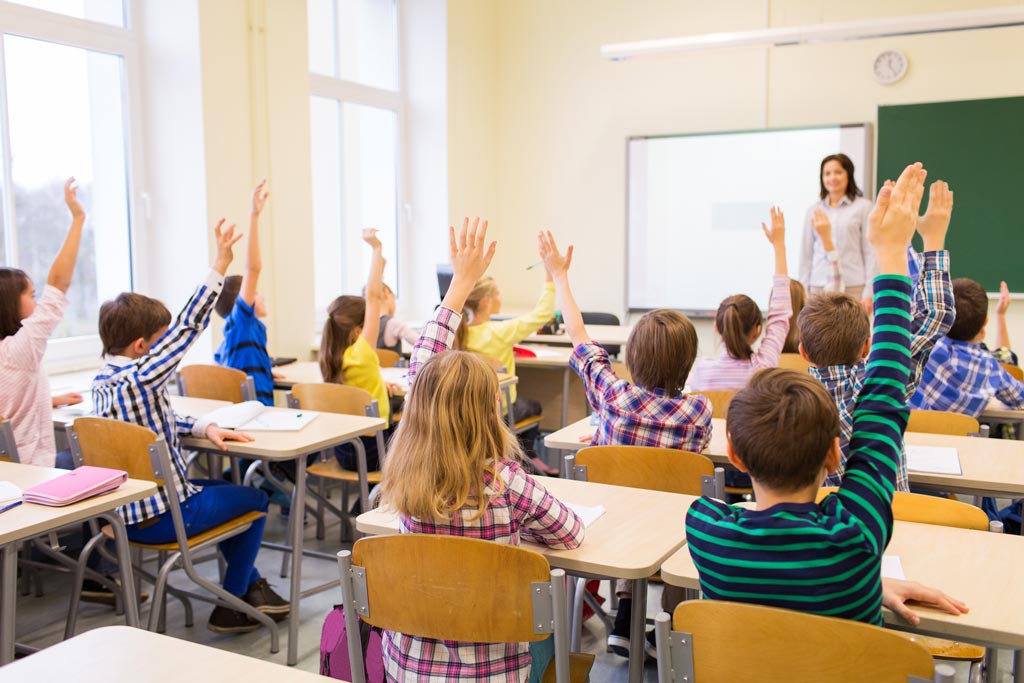
The most interesting part of the provision, however, concerns the concrete effects in the classrooms. Because the real issue is no longer whether artificial intelligence will enter schools, but how it will be used.
In recent months, teachers and school leaders have found themselves faced with rapid change: students using chatbots to do research, automatically generated texts, instant translations, book summaries and even supports for mathematical or coding exercises. In many cases schools reacted in a disorganized way, oscillating between enthusiasm and fear.
The decree instead tries to create a stable training structure, with the aim of teaching school staff how to use AI in a conscious, ethical and integrated way in teaching.
We’re not just talking about technical skills. The text of the decree also mentions topics such as digital citizenship, protection of personal data, ongoing teacher training and responsible use of digital tools.
The most important regulatory reference is to the European Regulation on artificial intelligence, already included among the legislative bases of the provision. A clear signal: AI in schools will have to develop following criteria of safety, transparency and human control.
The PNRR accelerates the digital revolution of schools
The investment falls within Mission 4 of the PNRR dedicated to education and research, within the line “Integrated digital teaching and digital transition training for school staff”.
In recent years the Italian school system has already gone through a profound digitalisation accelerated by the pandemic, the spread of distance learning and the arrival of collaborative platforms. Now, however, the leap is different: artificial intelligence is not just an operational tool, but a technology capable of changing the very way in which skills are studied, taught and assessed.
This is why the decree is attracting great attention not only among teachers, but also among families, students and professionals in the educational sector. AI is perceived simultaneously as an opportunity and a risk: on the one hand it can personalize learning and simplify many activities; on the other hand it opens up enormous questions about the verification of skills, creativity, technological dependence and critical capacity.
Italian schools, in the meantime, have already started their biggest experiment: teaching how to live with artificial intelligence which, for millions of students, is now part of daily life.