The Tai Po fire leaves 151 dead. It’s not bamboo that fueled the flames: illegal materials, negligence and cultural identity under attack
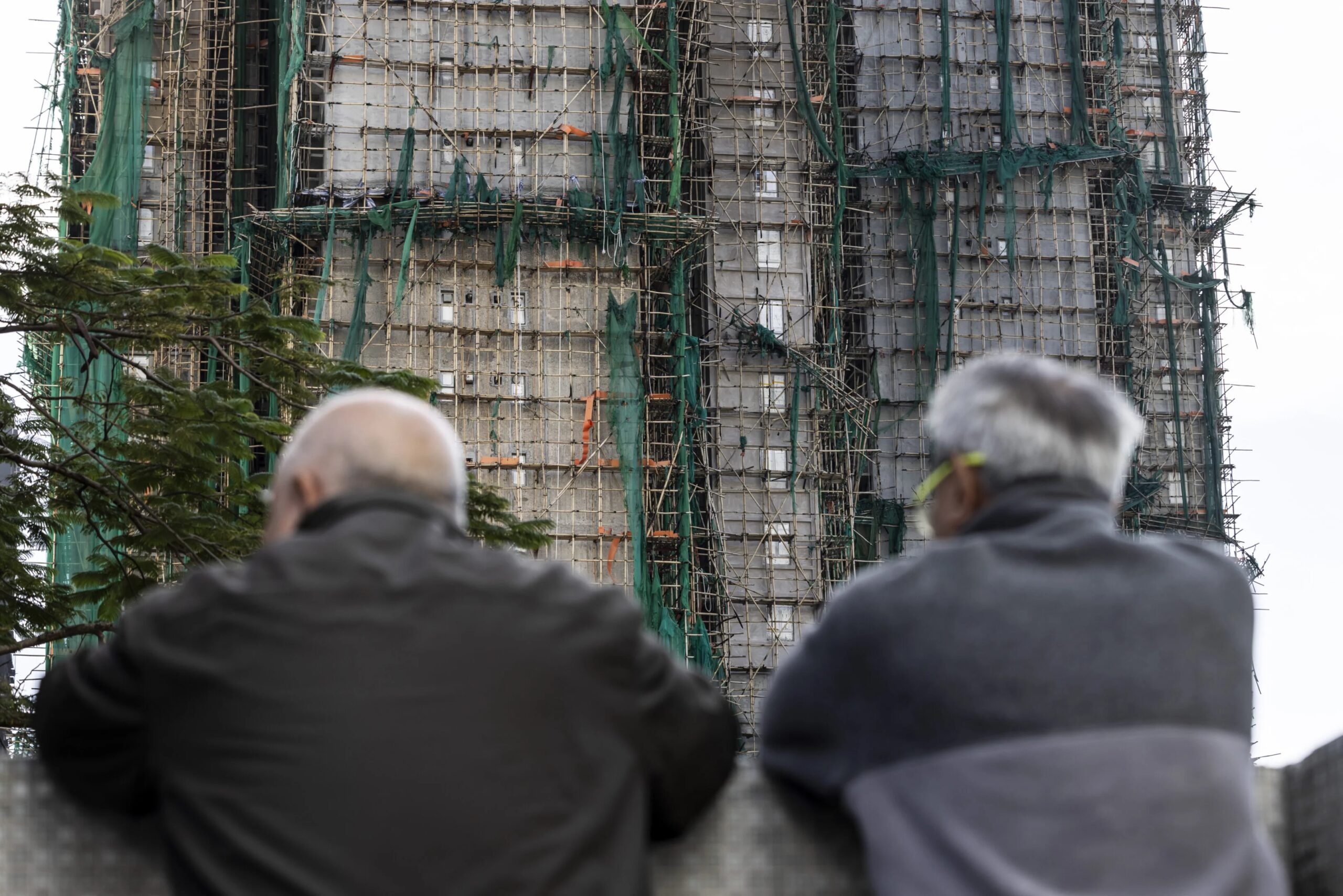
There is a detail that stands out in the images of the fire in Wang Fuk Court, in the Tai Po district: after days of flames, the bamboo framework of the scaffolding still appears straight, almost intact. Yet many international news reports had indicated that material – a symbol of Cantonese craftsmanship and the vertical skyline of Hong Kong – as the ideal culprit. A ready narrative, which isolated an easy-to-point visual element, while ignoring the complexity of the disaster.
Bamboo does not burn. Illegal tarps and flammable materials do. And they burn quickly.
According to Finn Lau, quoted in a widely shared thread on The photographs following the fire show: the bamboo framework bent, not disintegrated. The rest of the building melted.
1/ I don’t often speak in my professional capacity as a Hong Kong–born, UK-chartered construction professional (MRICS, MAPM, NECReg, among others). But I need to address inaccurate reporting about bamboo scaffolding in the Hong Kong Tai Po fire.
(1/9) pic.twitter.com/8PXUufTlqv
— Finn Lau 劉祖廸 (@finnlau_cd) November 28, 2025
The bottom line: a budget that is growing dramatically
The fire broke out on the afternoon of November 26, 2025 in the Wang Fuk Court residential complex, which was undergoing renovation. The flames hit seven of the eight towers of the complex, which had thousands of inhabitants.
In the following days, the toll of the catastrophe steadily worsened. The official number of deaths has risen to 151. The confirmed injuries amount to approximately 79 people, and dozens – over 40 according to the latest declarations – are still missing or unidentified. The dead also include at least one firefighter, called to help under a hail of debris and smoke.
The rescue operations and identification of the victims continued for days, in a scenario of total destruction, with entire buildings transformed into smoking catastrophes, and dozens of families deprived of any certainty.
The authorities’ response: arrests, investigations and suspicions
After the fire, the Hong Kong police launched a large-scale investigation: approximately 14 under investigation for suspected manslaughter and negligence — managers, technicians and site managers. At the same time, an investigation was launched for possible corruption in the renovation work, in the context of the alleged use of “low-cost, high-risk” materials to increase profits at the lowest cost.
The first official findings confirm that some external protective sheets – used to cover the bamboo scaffolding around the buildings – they did not meet fire standards. At various points, seven of the twenty samples taken were found to be non-compliant. Together with foam panels and flammable covers, these materials would have accelerated the spread of the flames, turning the fire into a rapid and unstoppable inferno.
Despite the tragedy, the government has already announced its intention to replace (or ban) the use of bamboo scaffolding in favor of “safer” metal scaffolding, without waiting for the conclusion of the technical investigation. A decision that many interpret as a political choice: more than security, a symbolic fact.
When technique is intertwined with the erasure of identity
If bamboo isn’t the culprit, someone has a vested interest in making it appear so. Hong Kong appears like a city from which its memories are slowly being taken away. First the neon signs, dismantled one by one. Then the historic shops, canceled without fanfare. Then the language, reduced to a folk dialect. Now the bamboo scaffolding — not a simple construction method, but a visual silhouette, an identifying feature, a way of “suspending” above the metropolis with an elegance that no metal can ever replicate.
While the West and certain media chase the simplified “dangerous bamboo” narrative, the real issue — that of accountability, corruption, shoddy materials, ignored safety — remains hidden, out of focus. It is a disaster built in the silence of omitted laws, of betrayed trust, of looted memory.
The Tai Po fire is not just a building disaster. It’s a signal. The flame that devoured those buildings reached the heart of a city that seems to want to give up defining itself. Bamboo — physically resistant to fire, but vulnerable to political fire — becomes the ideal accused. And defending it means defending something much bigger: an identity, a history, a sense of belonging.
What remains after the flames
Hong Kong mourns the lives lost. It cries families, it cries dreams, it cries the very idea of home. The sirens go off, the last body is recovered, but the ash hides an uncomfortable question: who will really answer for this tragedy?
The scaffolding resists — and with it remains the bitterness of a legacy that risks being lost. The flames have consumed houses, but what really burns is the trust in those who govern, in those who build, in those who decide what to save and what to erase.