Consumption in China and India grew by 26%. New scenarios and outlet markets for Italian food in the balance sheet of the Italia del Gusto consortium
Italian food continues to conquer foreign markets, but it does so in one increasingly jagged scenario. Robust growth in Europe, slowed down in the United States, new players appearing on the scene. This is the picture that emerged from the celebrations for the twenty years of Italia del Gusto, the consortium that brings together some of the main companies in the sector, staged at the Chiostro del Bramante in Rome.
What the protagonists of Italian food say
The figure that best explains the growth of the Consortium is that of the aggregate turnover: from 5 to 35 billion euros in two decades. For Giovanni Rana, the group’s strength lies in sharing: «We do well because we export food, and Italian food is adored all over the world».
Along the same lines, the president of the Consortium, Giacomo Ponti: «In these twenty years, Italia del Gusto has demonstrated that creating a system is not just an organizational choice, but a true strategic lever to compete and grow on international markets». And he adds: «The strength of Made in Italy today lies in the ability to present itself in a cohesive way on foreign markets, enhancing identity, quality and innovation».
According to the Minister of Agriculture Francesco Lollobrigidathe Italian strong point remains distinctiveness: «We have a resilient system capable of dealing with every commercial and geopolitical dynamic correctly, as Italians, who know how to assert themselves in the most difficult conditions».
A global economy at different speeds
The data from the Nomisma Observatory for Italia del Gusto photograph a world that is growing, but in an uneven way. Global gross domestic product is expected to rise by 3.3 percent in 2025, driven above all by emerging economieswhile the euro area shows a weaker profile.
Food consumption also follows this fracture: in India and China, per capita spending on food and drink grew by 26 percent between 2019 and 2024, a pace that mature economies are unable to keep up with.
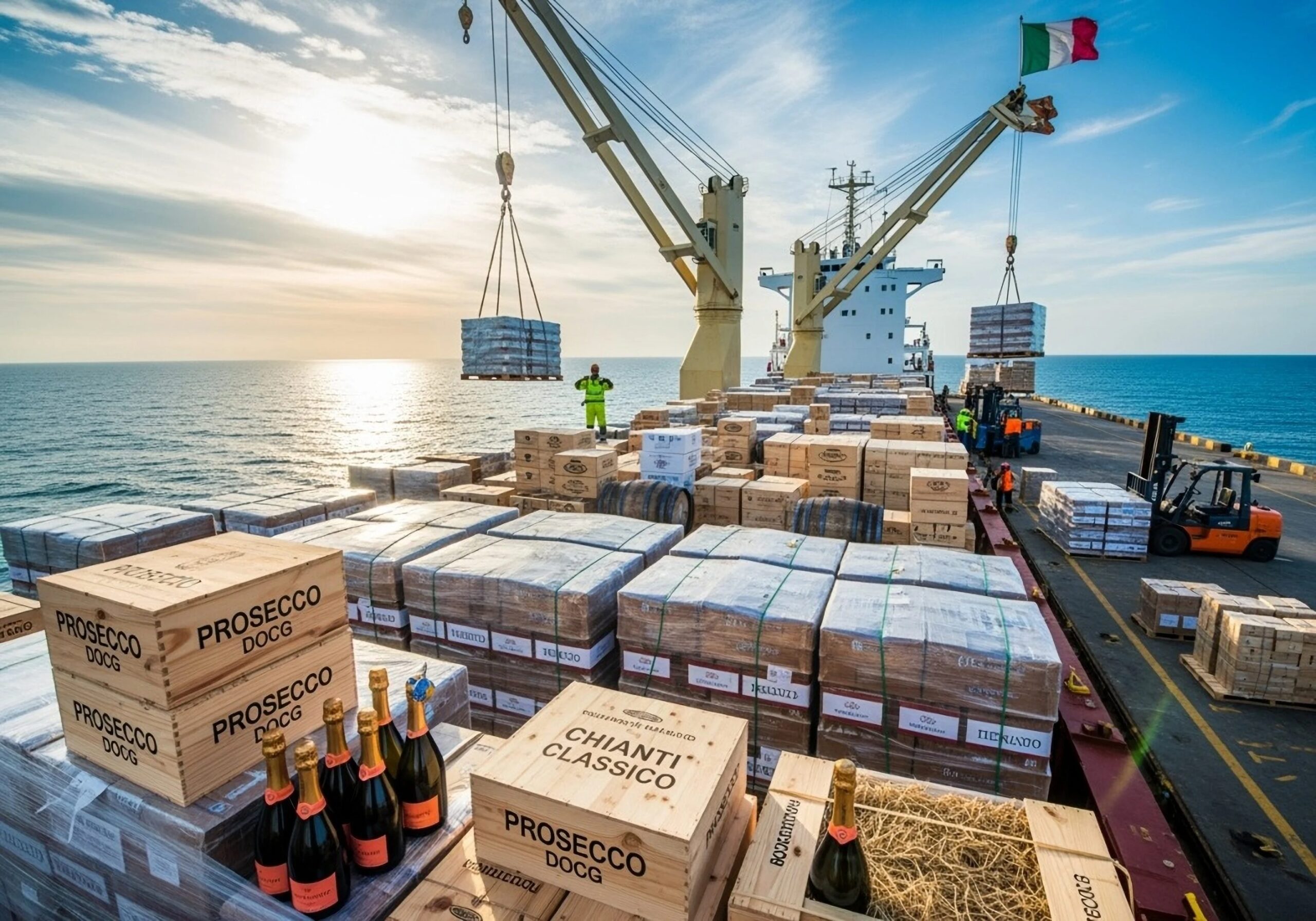
In 2025, Italian agri-food exports will be worth 59.3 billion eurossixth position in the world and a 4.6 percent share of global trade in the sector. Growth is 5.1 percent, but with lights and shadows.
Europe is driving (plus 7.3 percent), with Poland (plus 21.6 percent) and Spain (plus 13 percent) among the most dynamic markets. France and Germany remain the most loyal partners for Italian food, which represents 9.9 and 9.3 percent of their imports in the sector respectively.
It’s a different story for men United States, where Italian exports fell by 4.5 percentthanks to the effect of duties. A sign that the dependence on a few outlet markets, which weigh on the United States, Germany, China, the United Kingdom and France (about three-quarters of global demand), remains an issue to be addressed.
The present and future challenges for Italy
In this context, coffee, baked goods, chocolate and cheese confirm Italian competitiveness in key segments.
Twenty years after its birth, Italia del Gusto has therefore confirmed a model that has been able to adapt. The challenge, now and in the future, will be control new markets without losing ground on traditional onesin a global economy that no longer grants positional income.