Life Burns Faster is the title of Metallica’s residency at Sphere in Las Vegas. Until March 13, 2027
From the outside, the Sphere already seems to belong to the imagination of Life Burns Fasterthe title of Metallica’s residency in Las Vegas: a huge presence in the city landscape, capable of changing face and colour, of becoming a luminous surface under the desert sky. Inside, the images cover the spectators, the sound floods the room with the right power; the multisensory effects involve the body beyond the gaze. Metallica is the first metal band to perform in this space.
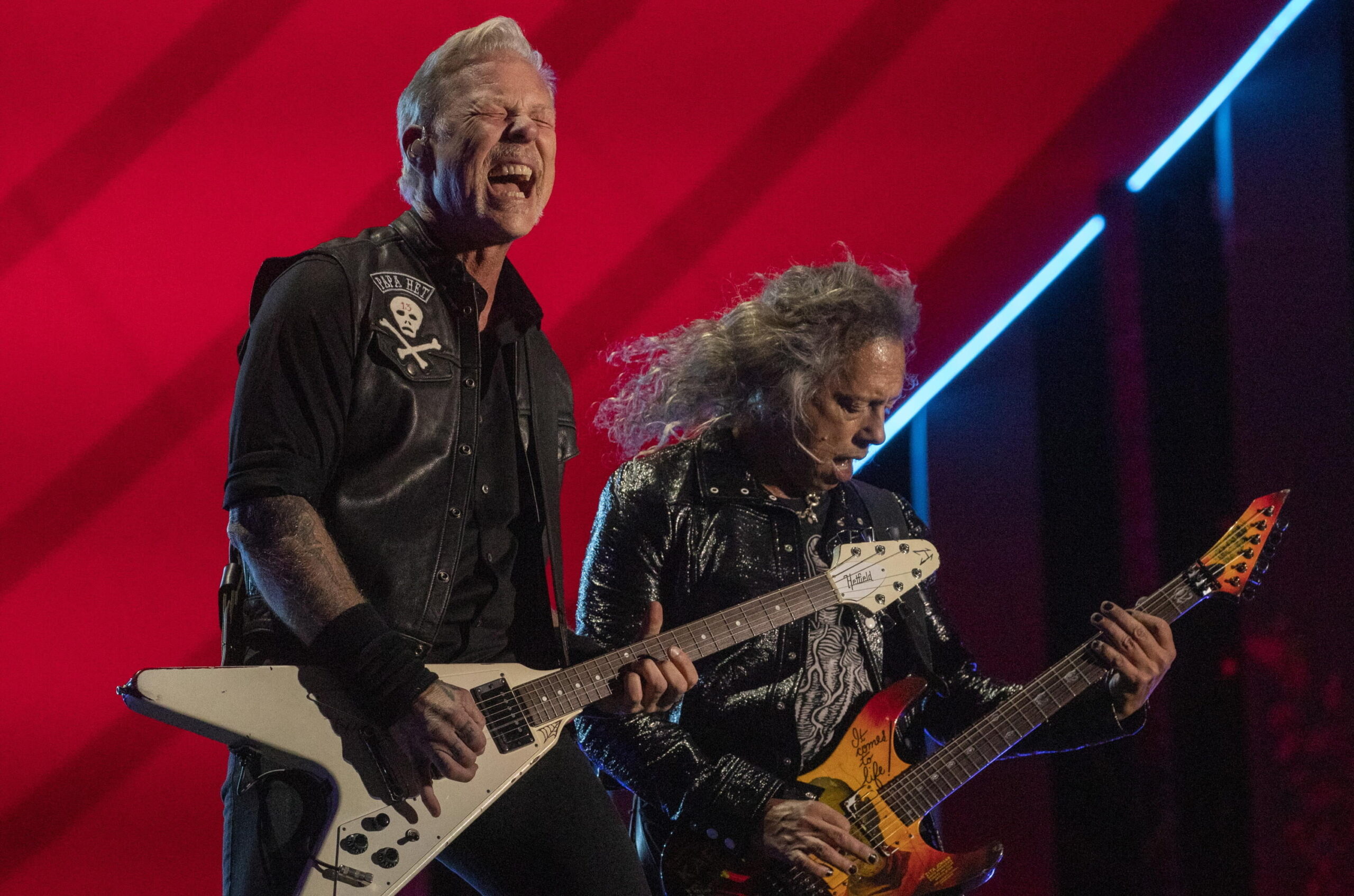
The grandeur of the show isn’t just in the size of the screen or the power of the system. It lies in the way in which each element contributes to a single direction: the music lights up the image, the image amplifies the music, and the entire space behaves like a visual and sound sounding board. The stage, with the four musicians, remains the physical nucleus of the scene; all around, the Sphere expands what the songs already contain.
Metallica have always composed also through images: electricity, war, ruin, machines, abysses, bodies fighting against forces bigger than themselves. At Sphere, this symbolic repertoire takes on monumental dimensions. THEn The Call of Ktulua tentacled creature emerges from the sea and looms over the musicians; the scene becomes even more intense when James Hetfield dedicates the song to Cliff Burton, the bassist who died in 1986.
During Ride the Lightningthe audience is immersed in the iconography of the electric chair. In Master of Puppetsthe landscape is converted into a military cemetery, with the figures of the band members projected onto the crosses. Technology doesn’t sweeten Metallica’s imagination: it offers it a huge surface on which to become visible.
The direction also knows how to slow down and change register. In The Day That Never Comesthe sand flows through enormous hourglasses; in Wherever I May Roama black and white ride through places and landscapes. Onewith its war iconography, pushes the relationship between sound and vision to physical sensation. Each song thus takes on its own horizon: now apocalyptic, now hallucinated, now almost elegiac. The song does not disappear into the film that accompanies it; is magnified, as if the images made the inner scale of the music perceivable.
The setlists also contribute to the size of the event. In the first two dates at the Sphere thirty-two different songs were performed: sixteen per evening, plus an instrumental interlude by Kirk Hammett and Robert Trujillo. Each concert therefore presents itself as an autonomous chapter; together, the two evenings compose a broader portrait of their musical history.
The Sphere also poses an essential question: How spectacular can a concert be before the show takes away attention from the music? But it is precisely here that Metallica find their balance: in the transition from digital vertigo to the concreteness of the riff, from the total landscape to the gesture of a musician who hits a drum or bends a note. The room can become an ocean, a cemetery or a burning sky; but the music drives everything.
Life Burns Faster thus takes Metallica’s ambition beyond the scale of the arena. It pushes the rock concert to the limit: grandeur is not an abstract measure. It’s the moment when a riff seems to be able to shake an entire landscape; in which a song from forty years ago, despite a sea of lights, special effects and colours, remains what it was: an emotion.