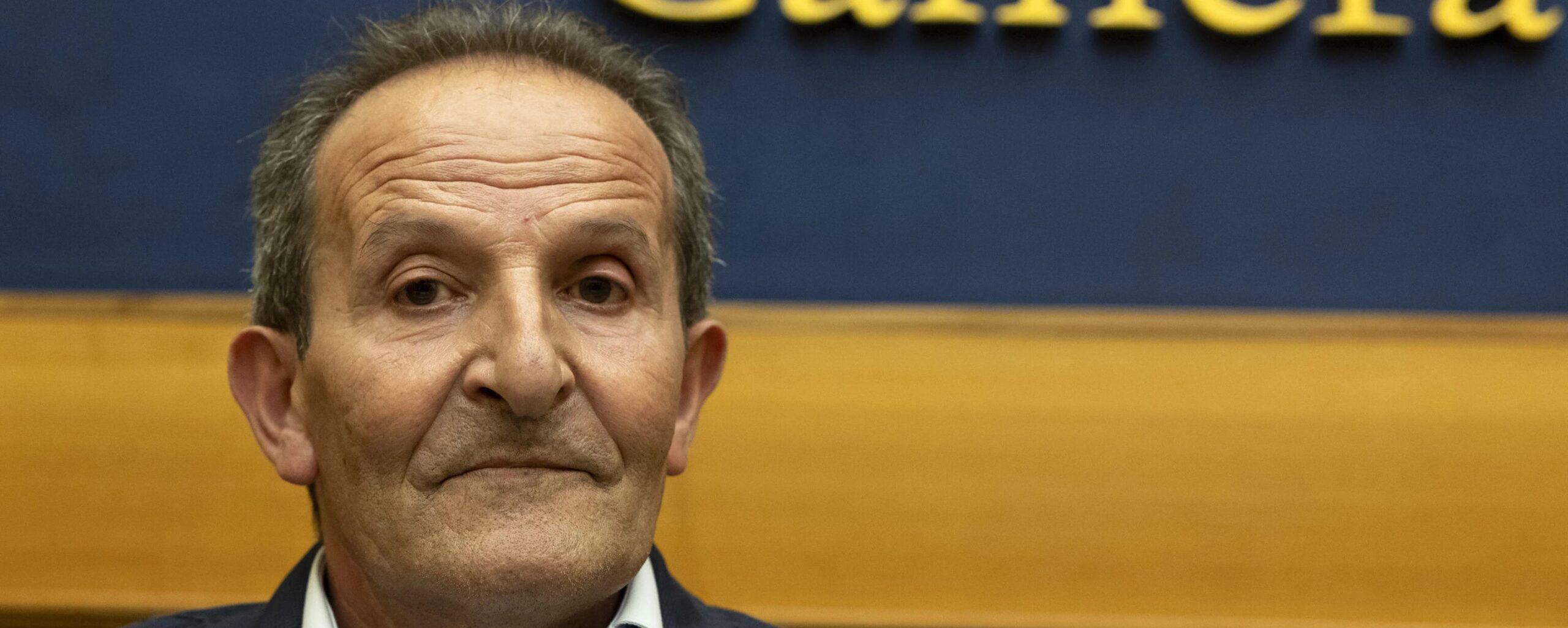
From the Zuncheddu case to the Garlasco crime: judicial errors, years in prison and the difficult road to reviewing trials in Italy
From Garlasco to the Sinnai massacre. Reasonable doubt does not only concern Alberto Stasi. Beniamino Zuncheddu was released from prison on 25 November 2023. He was 57 years old and had spent 32 years in prison for a massacre which, in retrospect, according to the Italian judiciary, he had not committed. The final acquittal came on 26 January 2024, when the Court of Appeal of Rome acquitted him “for not having committed the crime”.
The story of Beniamino Zuncheddu
It all begins on the night between 7 and 8 January 1991, in a sheepfold near Sinnai, in the province of Cagliari. Three shepherds are shot dead: Gesuino Fadda, 56 years old, his son Giuseppe, 24, and Ignazio Pusceddu, 55. A fourth shepherd, Luigi Pinna, survives seriously injured. He is the only eyewitness.
The investigations develop in a climate of media pressure and old tensions between local families. The investigators soon focus on Beniamino Zuncheddu, shepherd of Burcei, due to previous conflicts with the Faddas. On November 26, 1991, he was arrested. The Court of Assizes of Cagliari sentenced him to life imprisonment, based largely on the testimony of Pinna, who during the course of the investigation had changed his version: first he had said he did not remember the attacker, then he had indicated Zuncheddu after he had been shown in a photograph by agent Mario Uda.
The vicissitudes and acquittal of Zuncheddu
For decades, requests for review of the process are multiplying, but are constantly rejected. Then, in 2021, the lawyer Mauro Trogu manages to obtain the reopening of the proceedings. On 14 November 2023, the confrontation between Pinna and the former inspector Uda before the Court of Appeal of Rome highlights contradictions that change the picture: Pinna claims that the agent had shown him the photo of Zuncheddu before the interrogation, influencing his recognition. Uda denies it. But the doubt, at that point, is more than reasonable.
After the acquittal, in August 2024, Jorge Mario Bergoglio received Zuncheddu in a private audience in the Vatican. A symbolic gesture that relaunched the debate on necessary reforms to prevent similar cases from happening again. Today Zuncheddu lives in Burcei, participates in conferences on restorative justice and continues to ask that institutions not forget the victims of judicial errors.
From Sinnai to Garlasco
A detail unites the story of Zuncheddu to the case that today holds center stage in Italian judicial news: the name of Francesca Nanni, Attorney General of Milan. It was she, in 2019, who signed the request for review of the Zuncheddu trial. It was she who studied the documents, identified the cracks in the reconstruction of the Sinnai massacre and built the path that led to the man’s liberation.
Today, another delicate dossier passes through his office on the third floor of the Palace of Justice in Milan. The General Prosecutor’s Office of the Lombardy capital is responsible for evaluating the documents that the Pavia prosecutor’s office should transmit in the coming weeks: documents collected in over a year of investigations into the crime of Chiara Poggi, killed in Garlasco on 13 August 2007, for which Alberto Stasi was definitively sentenced to 16 years in prison (and he served more than ten). The task of evaluating those documents was entrusted to the Attorney General, in the person of Lucilla Tontodonati.
The situations of Stasi and Zuncheddu
Here it is necessary to make a clarification. As for Stasi, there is still no review of the trialnor an official pronouncement of innocence. The 43-year-old is currently a definitively convicted criminal. But the reopening of the investigation in 2025, with the hypothesis that the person responsible for Chiara Poggi’s murder could be another person, Andrea Sempio, is at the center of the new investigation. In any case, until the trial is reviewed, it will remain an investigative hypothesis, not an established procedural truth.
The judicial system allows the review of trials precisely to correct errors, but the journey is long and the outcome is far from obvious.
When a miscarriage of justice ruins a person’s life
Both the Garlasco crime and the Sinnai massacre have shown unequivocally, however, that the judicial system sometimes produces unjust sentences, which are terrible for those who suffer them. And it also showed how difficult it is to dismantle them once the sentence has been pronounced: it takes years, tenacious lawyers, witnesses who change their version, discussions in the courtroom.
The issue that many jurists indicate, also in light of this story, is structural: the law on trial review is cumbersomethe times are long and the guarantees of impartiality are not always sufficient. Zuncheddu himself, together with Marco Pannella’s Radical Party which has supported him for years, is calling for reforms that make the process quicker and fairer.
The Garlasco case, with its developments still open, raises the same questions again. Not because Stasi is innocent regardless, of course, but because the mechanism is the same: hasty and superficial investigations, questionable testimonies, media pressure, sentences that leave aside reasonable doubts. And the possibility, therefore, of continuing to make mistakes and ruining the lives of innocent people.