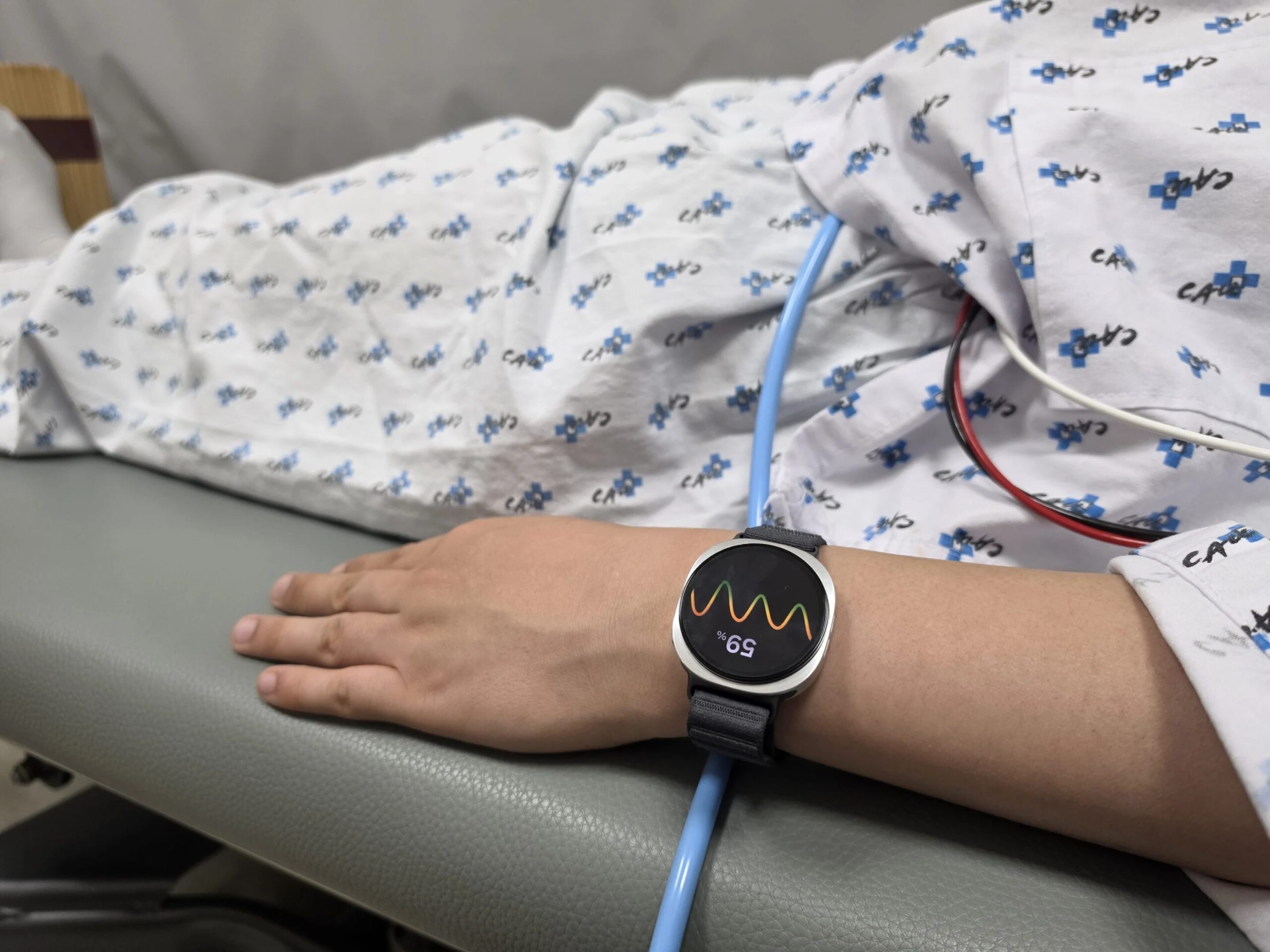
A clinical study conducted with Chung-Ang University Gwangmyeong Hospital shows that the Galaxy Watch6 can anticipate vasovagal syncope up to five minutes before it occurs, with an accuracy of 84.6%. A worldwide discovery that opens a new era in wearable preventive medicine.
With the new study presented by Samsung, the Galaxy Watch is a candidate to become one of the most advanced smartwatches in the field of health prevention. The research, carried out together with the Chung-Ang University Gwangmyeong Hospital in South Korea, demonstrates how the Galaxy Watch can be able to predict a faint up to five minutes before it happens, opening up completely new scenarios in the digital health sector.
The study focuses on vasovagal syncopeone of the most common forms of fainting, caused by a sudden drop in blood pressure and heart rate. A condition that can manifest itself in situations of severe stress, pain or fatigue and which often causes sudden falls with possible physical consequences. According to researchers, nearly 40% of people may experience at least one episode in their lifetime. And this is precisely where the Galaxy Watch it could make a difference.
Promising results
To conduct the research, the team involved 132 patients with symptoms compatible with vasovagal syncope. Using the PPG sensor built into the Galaxy Watch 6capable of detecting the heartbeat through light signals, and an algorithm artificial intelligencethe system was able to detect the arrival of a faint with an accuracy of 84.6%. In many cases the Galaxy Watch was able to anticipate the event up to five minutes earlier, giving the user the time needed to sit down, ask for help or avoid a dangerous fall.
The mechanism underlying the discovery It’s quite sophisticated. The Galaxy Watch6 is equipped with a sensor PPG (photoplethysmography)which measures changes in blood flow through light pulses applied to the wrist. The data collected, in particular the heart rate variability (HRV)are processed by a artificial intelligence algorithm capable of identifying abnormal patterns that anticipate impending vasovagal collapse. The clinical sensitivity achieved by the study is 90%a fact that takes on significant weight in the medical context.
A paradigm shift
Jongmin Choi, head of the Health R&D group at Samsung Electronics, framed the discovery within a broader vision: the shift of the healthcare paradigm from a “after-care” towards a model of “preventive care”in which the continuous monitoring of the Galaxy Watch anticipate the problem before it occurs. Samsung has announced its intention to further expand collaborations with leading medical institutions, focusing on healthcare solutions personalized and preventive health.
This news does not come in isolation. In recent years, the frontier of devices such as the Galaxy Watch she moved decisively towards the cardiovascular health and overall well-being of the person. Already in 2019, research published on New England Journal of Medicine demonstrated the ability of smartwatches to detect the atrial fibrillationthe most common arrhythmia in the world and a major risk factor for stroke. Atrial fibrillation is the most prevalent form of arrhythmia and represents a significant risk factor for stroke and heart disease, making early diagnosis crucial for prevention.
Subsequent studies have confirmed that wearable technology has gone beyond the dimension of simple fitness to fully enter the field of medical prevention, offering advanced tools to observe the state of the heart in real time.
The smartwatch as a health ally
But the contribution of Galaxy Watch and other advanced wearables goes far beyond the heart. These devices are becoming daily allies of well-being on multiple fronts: they monitor the quality of sleepanalyzing REM phases and deep rest cycles; they incentivize physical movement with daily goals of steps and minutes of activity; remind the user of hydrate during the day; track the levels of stress through cardiac variability; and in some models they even measure the blood oxygen saturation.
Bringing a week’s worth of data collected by smartwatches on your heart rate or sleep to a doctor’s visit can be much more useful than a single measurement in the office. This is precisely the direction: increasingly profound and coordinated integration between personal, medical and healthcare facility data.