From derbies to Bob Marley, from boxing to the popes, from the triumphs of Inter and Milan to the Olympic nights: the book The Century of San Siro tells the story of the most loved stadium in Italy in 101 episodes. An immortal place, whatever fate awaits it.
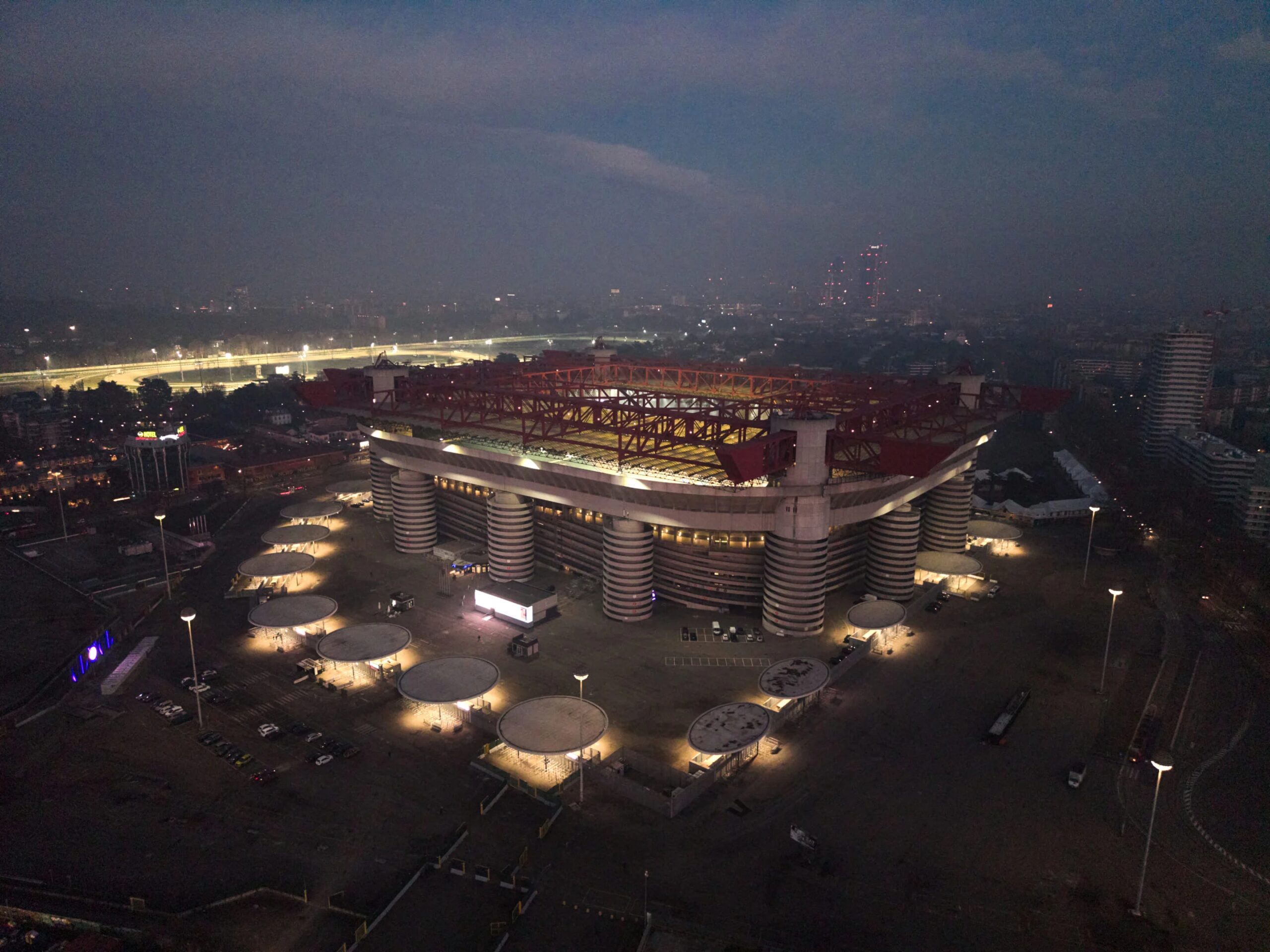
The king is dead, long live the king. Better to say it right away so as not to have to repeat it later: there is nothing old-fashioned, nostalgic or whiny in the stupendous «The century of San Siro» (Meravigli edizioni), the book that celebrates 100 years of an immortal stadium, whatever its fate. And it’s fun to read – one after the other – the 101 key moments of a story to remember, not only linked to Inter and Milan. Because that spaceship «has hosted popes and cardinals, rockers and opera singers, boxers and rugby players. It is the stadium sung by poets and writers such as the AC Milan fan Franco Loi (“Sansir l’era un cadin d’erba e culur”) or the Inter fans Vittorio Sereni and Giovanni Raboni; the latter investigated it as a place of psychopathology of typhus from which he himself happily declared himself affected”.
Thus write the authors, two long-time journalists who have frequented it all their lives, Claudio Colombo and Fabio Monti, and they tell it with the affection and precision due to the living room of one’s own home or on a terrace overlooking the infinite. In the labyrinths of time you can find everything, even the birthright of Piero Pirelli, president of Milan, who in 1926 had a 35,000-seat facility built with an English-style feature: without the athletics track, it was only supposed to be an arena for football. Inauguration on 19 September with the usual derby: Milan-Inter 3-6. But the first ever goal was scored by a Rossoneri player, Giuseppe Santagostino, known as “Pinoeugia”, an informal term of endearment for Pino.
We can already see the driving force of the Milanese upper middle class, represented by successful families such as the Pirellis, the Rizzolis, the Morattis (later the Berlusconis), capable – in an era without too many bureaucratic-social-grilline balls and chains – of leading the pocket metropolis into true modernity, not that of nonsense cycle paths. One of the designers, Ulisse Stacchini (the other was Alberto Cugini), worried about the vastness of the work, asked Pirelli: «If the fashion for football were to pass, what would we do with it?». Answer without the possibility of reply: «Don’t worry, it will never happen, football has now made its way into the world».
Born as a Milan stadium, in 1935 it passed to the Municipality and immediately after the war (1947) it also hosted Inter, who deigned “to move to the outskirts in the midst of the fog” for a disarmingly current reason: the hypothesis of expanding the Arena ran into the constraints of the Fine Arts “as a monument built by Napoleon”. Meanwhile, the national team arrives at San Siro for the 1934 World Cup and there is a full house in the stands in the semi-final against the Austrian phenomena of the champion Sindelar, the Mozart of goals (a sort of Ibrahimovic of the time), won 1-0 by the Azzurri. Again with the Austrians, in 1946, a curious thing happens: Italy is ahead 3-2 but is also on its knees. The public notices this and in the 90th minute calls for an end to the match but the Swiss referee Schertz allows the game to continue for another 4 minutes and 40 seconds. When he blows the whistle, a liberating scream shakes San Siro. It will be the race director who will reveal the mystery of the exaggerated recovery: the clock (also Swiss) had stopped.
Second ring, third ring, dry grass from a Milanese garden in Beppe Sala’s time: it’s all there in “The Century of San Siro”, from the endless derbies to the champions who lit them up. From Giuseppe Meazza who gives his name to the stadium to the legendary AC Milan player Gre-No-Li, from Benito Lorenzi known as Veleno to José Altafini, an indolent phenomenon already at 20 years old. And then the epic (also photographic) of Nereo Rocco and Helenio Herrera. The first, professor of the counterattack and pressing with the phrase: «Hit everything that emerges from the grass, if it’s the ball, never mind». The second who called Facchetti “Cipelletti” and on the Nerazzurri bench won league titles and European Cups.
Not just football. In 1960 San Siro became a boxing paradise, with the world rematch of the lost junior welterweights between Duilio Loi and Carlo Ortiz. Monti and Colombo write: «The anticipation for the challenge is great, all of Milan is talking about it, and it is not a joke: in the bars, on the trams, in Piazza Duomo there is not a group that doesn’t stop to discuss who will be the winner. San Siro is in its best form: the ring placed in the center of the pitch is surrounded by chairs reserved for VIPs. Sold out, 53,043 spectators, gross of 130 million lire.” Loi wins, above all the stadium wins which 5 years later is the scene of the Mazzinghi-Benvenuti super challenge, with a parterre made up of Marcello Mastroianni, Renato Rascel, Delia Scala, Murizio Arena. Entertainment and vaudeville. Flash from a lost world.
Like that of Jair, Maldera, Giussy Farina, Ivanhoe Fraizzoli. And related sporting feuds between cousins counterpointed by the caustic comments of Peppino Prisco, who on the first day of Massimo Moratti’s presidency (19-2-1995, Inter-Brescia 1-0) hissed: «He has the character, will and intelligence of his father. If he’s also lucky we’re good. And then his debut coincides with a defeat for Milan, which I don’t mind.” Chapters follow one another like cherries, with gems from times gone by such as «Lodetti’s magical Sunday», «Operation overtaking», «The great comeback» (Inter-Liverpool). And the whole formidable saga of Silvio Berlusconi and his 5 Champions lived in the basin of history.
San Siro is always there, a stone witness to the exploits of Baresi, Donadoni, Van Basten, Gullit, Rijkaard. And on the other side of the Naviglio, Ronaldo’s phenomenon, who arrived after a family meeting in which all the members were against such a huge expense. “We must help people who suffer,” said Gianmarco Moratti, who financed the meritorious work of San Patrignano. Massimo replied: «Who suffers more than Inter fans?». A place for world premieres, the stadium is also suitable for rugby and in 2009 it hosted the All Blacks against the Italian national team: 80,000 crowned the event, with Italy responding to the Maori “haka” by entering the field to the tune of Carmina Burana.
Everything leads back to football but on 27 June 1980 something exceptional happened: for the first time the stadium hosted a rock concert and danced to the rhythm of reggae. There’s Bob Marley, a historic date with wonderful music (21 songs), 100,000 delirious spectators, joints and a devastated lawn that creates a sensation among the purists of the usurped ball. It is the beginning of a long season of concerts, from Edoardo Bennato to David Bowie, from Bob Dylan to U2 up to the season ticket for Vasco Rossi. Only guitars? No, in 2011 a colossal Verdi Aida was set up with a 50 by 25 meter stage, 600 artists, obelisks, palm trees, golden lions in the background. But only 8000 spectators due to a hailstorm a few hours before the start. The following day the Corriere della Sera critic, Enrico Girardi, wrote: «The music is the last accident of the evening». Experiment never repeated again, general comment: «It’s better for the La Scala of football to remain».
San Siro is not just the temple of the profane. He longs to obtain a blessing, which arrives when Cardinal Martini organizes a gathering of confirmation candidates inside the Meazza (1983) destined to become a significant moment in the life of the city. And in 2012, 80,000 faithful welcomed Pope Benedict XVI, invited by the then archbishop Angelo Scola. Even Pope Francis crosses the stadium in the popemobile in 2017. A century of stories, a crossroads of emotions and even nightmares. Like the one on February 19, 2020, when at the end of Atalanta-Valencia it was discovered that Covid is among us and the stands packed with stadiums could have been a multiplier of the contagion.
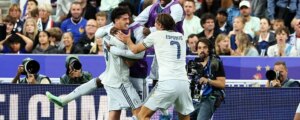
There is life among those spiral staircases where “Giroud turned” and Francesco Acerbi made the Inter fans experience the miracle of the night against Lamine Yamal’s Barcelona. There is a century to remember in that brightly lit casket for the opening ceremony of the last Italian Winter Olympics. Now he is back in the ownership of the clubs and everyone is talking about a farewell move. Without having reckoned with the ghosts that inhabit and protect it.