It is an exchange of jokes that has gone around the world, the one between Vladimir Putin and Xi Jinping on 3 September in Beijing. “Biotechnology progresses continuously,” said Putin. «The human organs can be repeatedly transplanted. Further live, younger become. You can even achieve immortality ». And Xi Jinping replied: “In this century, people are expected to live up to 150 years”.
The only apparent naivety of these statements has led many to conjecture different interpretations, from the most pragmatic to the most speculative: as if the two leaders wanted to allude to something else. Emblematic that of Chad De Guzman, correspondent of the American weekly Time, for which the two powerful wanted to make the world question their technological power in the field of health and the control of life itself. In short, they intended to transmit the idea of a global domain that does not want to be only military but also biological. In the background, a political culture in which the idea of longevity is inherent in the leader himself, considered as a sort of “eternal guide”.
But beyond speculations, what’s right? And what is the point with the progress of biotechnology?
If we are at a literal interpretation, the statement of XI that people will live up to 150 years by the end of the century, finds no comfort in recent research. Without further progress in medicine, today’s young people may not live so much more than their parents.
For example, a study by the Max Planck Institute published in the American scientific journal Pnas (Proceedings of the National Academy of Sciences), has just found that the improvements of the life expectancy recorded in high -income countries in the first half of the twentieth century have undergone a significant slowdown and that none of the generations born after 1939 will reach 100 years. Another study by the English University of East Anglia, published in The Lancet, reveals that after 2011 in many European countries the rhythm with which life expectancy increased has slowed down due to factors such as obesity, incorrect diet, physical inactivity, effects of the Covid epidemic. And last year, in the “aging” section of Nature it was read that where the population is long -lived, improvements in life expectancy are decreasing more and more, as if we had achieved the limit value of longevity. There would therefore be a limit in the maximum age that can be reached beyond which it is difficult to go, at least with current knowledge and technologies.
And it is precisely in the latter clarification that the core of the issue lies. MRNA and CRISPR-CAS9 techniques have made biotechnology a field capable of reprogramming life on a fundamental level.
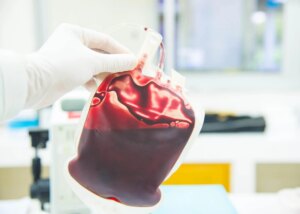
And its integration already underway with several other technologies, such as bioinformatics and artificial intelligence, or new calculation paradigms, such as high-throughput computing (HTC), in all probability they will accelerate the discovery of new organic compounds, will favor our ability to correct incurable diseases and will allow us to build organs and tissues for transplants. And it is precisely to the latter that Putin referred.
“If the progress of the 3D printing research of organs for transplants (bioprinting) will continue, it will be possible to live up to 120 years” says Giovanni Vozzi, a professor of bioengineering at the University of Pisa. «I think of the possibility of reconstructing as faithfully possible, in all the stairs, the complexity of a fabric. It is called 3D print because the organs are printed layer by layer on the basis of a digital 3D model, such as a CT or a magnetic resonance imaging »adds Vozzi. The printer heads contain “bioininchiostro”, or biomaterial, such as bioactive hydrogels to promote the growth of the new tissue, growth factors, cells and other biomolecules. The cells that form the ink come from a biopsy, have generally suffered a biotechnology intervention and are then mixed with a solution with nutrients capable of proliferating them. Thus an artificial liver can be imagined as an overlap of layers of hepatocytes and other cells of this organ, including those that make up the same blood vessels. The “head” stratum biostampa layer the different types of cells up to build the entire organ “explains the expert in detail. “The positive news is that, if before the fabrics were built in the laboratory by reproducing the conditions of the body, such as temperature, pressure, humidity, etc., now the print can be performed directly in the human body. For example, our European project “Luminate”, which coordinate, aims to totally reconstruct the osteochondral defects (bone+cartilage) damaged for those who have had traumatic lesions and tumors. It does this thanks to a tool that biostampa directly inside the human body. And our other project “Tentacle” regenerates mucous and submucous tissue of patients with ulcerative colitis or family adenomatous polypos thanks to the biostampa of colon tissues directly within the patient’s intestine “.
The crucial point of these research is that the cells injected are not only obtained from those of the patient himself, but they are also bioengineering, when necessary, for example in the case of the presence of a disease.
Bioprinting potentially concerns the development of any organ and tissue. «In Sweden they are developing corneas built with bioprinting for their future transplantation. The possibility of bio-store the liver is studied but also complex organs such as the retina. Biostampa projects of the epidermis, bones, hair follicles, bacterial bioma are all already in place and in the coming years we will have a personalized medicine in which organs will be built for a patient data starting from its bioengientized cells or its stem cells “concludes Vozzi.
Transplant research includes other strategies. The one on the xenotrapriants, that is, the transplants from animal to humans, marks continuous progress: recently a pork lung has been successfully engaged in scientists from Guangzhou Medical University in a human patient, and has remained vital and functional for nine days. The same applies to chimerism, the attempt to grow a human (or almost human) organ inside the animal, and then transplant it. A few months ago, Chinese researchers from the Guangzhou Institutes of Medicine and Health for the first time managed to grow buttons containing human cells within pork embryos.
Cell therapies will also contribute to prolonging life which, instead of replacing an entire organ, use cells to repair or enhance their functionality. Examples are the injections of stem cells in damaged hearts, the transplants of insular cells for diabetes or car-t therapy for blood cancer. The latter consists in withdrawing the patient’s T lymphocytes, modify them in the laboratory to “arm them” them against cancer cells, and reywing them in the person.
Carl June, professor of Immunotherapy at the Padolman School of Medicine of the University of Pennsylvania, is considered the father of this technique. Panorama interviewed him on the occasion of the assignment of the prestigious Balzan 2025 award, one of the most authoritative awards in the field of culture internationally. “In the future we will see the car-t cells effectively treat solid tumors such as pancreas and glioblastoma,” says June. «The next frontier is the use of this technology to restore the immune system and treat autoimmune diseases, such as lupus and multiple sclerosis. To get there, we have to design “smarter” car-t cells, capable of resisting the tumor environment, hitting more antigens to prevent relapses and be produced at more low costs ». For all this, biotechnology will have to perform other progress. «The Crispr/Cas9 technique is comparable to a sort of molecular scissors. To obtain the next generation of therapies “explains June” we need to make more changes simultaneously. The goal is to eliminate the genes that cause cellular exhaustion and make cells susceptible to rejection so as to insert others capable of protecting T cells from tumor defenses. Technologies such as the editing base and the first editing, capable of allowing thinner changes without completely breaking the DNA, will be essential to design these more sophisticated and safe cell drugs ». Thus, the countries that will conquer the dominance on biotechnology will also have it on the transplantation of the organs and on cellular therapies, and therefore on the lengthening of life.
The National Security Commission on Emerging Biotechnology, the Commission of the United States Congress, concluded that “China is acquiring leadership in the biotechnological sector, having made it a strategic priority for twenty years” and that “to remain competitive the United States must act quickly, otherwise they risk an irreconcurrent stop joke”.
The strong state support and regulatory harmonization to ensure that data from Chinese clinical studies support authorization requests in other parts of the world has accelerated cross -border collaborations. The fact that it is now easier and faster to conduct clinical studies in China than in the United States is fundamental. In terms of value, 32 percent of the granting agreements of pharmaceutical licenses all over the world in the first half of 2025 involved China, with an increase of 21 percent per year.
“The consequences are duplicate,” concludes June. «On the one hand, the competition creates a powerful engine for global innovation, but on the other it raises serious questions about ethical standards, regulatory harmonization and intellectual property. We will witness a geopolitical change in scientific leadership. The challenge for the global community, including the United States and Europe, will be to promote healthy competition and collaboration, ensuring the maintenance of the highest scientific and ethical standards for patient security and data integrity “.
Ultimately, from a scientific point of view, the goal of lengthening life through biotechnology is at hand. But there is a limit. Even if the organ transplantation will become routine in medical practice, we will always have to deal with the fact that the body’s ability to perform its functions, with age, inevitably reduces.